How Fancy Yarn Samples Are Reproduced: A Complete B2B Guide from Factory to Finished Yarn
With the arrival of autumn and winter, it is time to wear sweaters again, and all kinds of sweaters make people dazzled. Among them, the most popular is undoubtedly mossy yarn. Because it is warm and comfortable and has a very high cost-performance, it is very popular, and manufacturers continue to invest in research and development to develop sweaters that are more popular with the market and consumers.
As a fancy yarn manufacturer, we often receive sample requests from customers. Usually, they will send us a piece of cloth and ask us to make the same yarn. How do we ensure that the finished product is the same as the sample?
Determine Fiber Composition and Yarn Count
When you get a yarn sample, the most important thing is to determine its composition and count. The count can be determined by physically measuring the length/weight, while the composition requires more precise analysis. The basic structure of mossy yarn includes core yarn, press yarn, and roving. The three are separated by untwisting. The core wire is usually nylon or polyester. The D number and the number of roots can be obtained by observation or measurement. The identification of roving is relatively complicated because different components are mixed in it. The specific components need to be identified by burning, smelling the odor, and observing the flame, including polyester, acrylic, nylon, wool, cotton, etc. All have different characteristics. I have listed a table below, which can be tested at this time. In addition, comparing the length of the roving, short fiber, medium-long fiber, and long fiber, different rovings will have different effects on the sample.
Fiber Type | Burn Appearance | Odor | Notes |
Polyester (PET) | Melts, forms hard bead, may drip | Sweet chemical / plastic smell | Hard, shiny residue; does not ash easily |
Nylon | Melts slowly, forms soft bead | Odor of celery / fishy smell | Soft residue; can stretch slightly when hot |
Acrylic | Burns rapidly, shrinks away from flame, soft black ash | Burning hair / acrid smell | Ash is light, flaky, may self-extinguish |
Wool | Burns slowly, curls away from flame, black crumbly ash | Burning hair / burnt protein smell | Self-extinguishes; smell of burnt hair |
Cotton | Burns quickly, steady flame, light gray ash | Paper / burning vegetation smell | Leaves fine, soft ash; burns steadily |
Rayon / Viscose | Burns rapidly, bright flame, soft gray ash | Paper / chemical smell | Ash is soft and light; may curl while burning |
Determine Fiber Composition and Yarn Count
Once the composition and count are determined, we can basically outline the estimated price of the yarn, and then analyze its production process. For moss yarn, the most important step is to make roving. Generally, the roving will be dyed first, and then the black or white core pressure line will be used. Another situation is to make the raw white roving, and then dye it together after the finished product is made. The latter is suitable for some complex processes, such as the need for segment dyeing and spraying, and the corresponding price will be much higher. Using colored roving directly can reduce the process, improve efficiency and ensure the consistency of color. The production of roving will take up more than half of the production cycle. First, the various raw material fibers are mixed and loosened according to the proportion to remove impurities, and then further combed by the carding machine to form fiber strips while removing impurities. Finally, the fiber strips are combined, stretched and twisted to proceed to the next process.
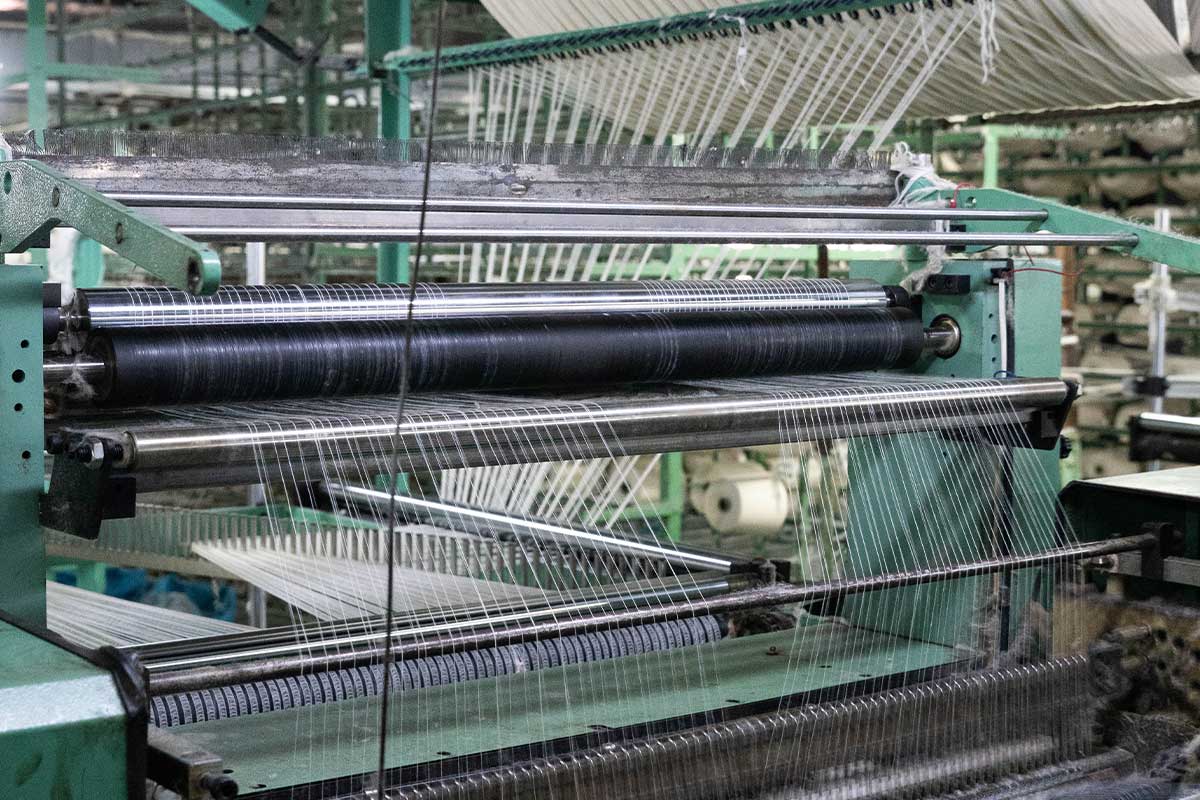
After the roving is finished, the preliminary yarn is processed by the fancy twister. By adjusting the twist, drafting and overfeeding of the fancy twister, the yarn presents the preliminary fancy effect, and forms circles on the yarn surface, which is convenient for the subsequent sanding or napping process. We use the latest fancy twister, which can form different fancy yarns and different fancy effects thru complex parameter changes. In general, the operation of fancy twister is the core of the whole production process.
Choosing Between Brushing (Shearing) and Raising (Napping) Processes
The sanding machine uses a high-speed rotating sanding roller (usually covered with emery, nylon sandpaper or abrasive cloth) to slightly rub the yarn or fabric surface, so that the surface fibers produce fine fluff, so as to obtain a soft and delicate peach skin feel. The yarn after sanding has a fine, short and dense pile, and feels soft. The raising machine uses a card-type or needle-cloth-type raising roller to “pull out” the fibers in the yarn or fabric from the inside to the outside in a “combing + pulling” manner thru hook-shaped metal fibers or flexible needle cloth to form a longer, fluffy and three-dimensional pile layer. The fluff of the brushed yarn is longer, fluffier, and has a stronger sense of volume, and it looks warmer and fluffier. The napping process is more complex and the cost is relatively higher, while the raising process has a higher output and is relatively cheaper. Although the yarn from the napping machine or raising machine is basically formed, there may still be some defects, such as broken ends, uneven thickness or flying hair.
Ensure Yarn Quality Consistency
In order to ensure the stability of the quality, the final process of automatic winding is required. The automatic winder is equipped with a yarn breakage detector and a yarn thickness detector. When the yarn is broken, uneven in thickness or broken, the machine will automatically stop or remove the abnormal part. It can effectively reduce the occurrence of fly, broken ends and uneven yarn, and ensure the stable quality of finished yarn.
Finally, we take the yarn to weave the piece, and make it into a cloth piece to compare the differences in the feel of the original sample.