
Feather Yarn vs. Mink Yarn: Comprehensive Guide to Sourcing Yarn for the Production of Sweaters
Feather yarn and Mink yarn have emerged as two of the most sought-after fancy yarns for fall and winter collections in the international knitwear supply chain of the present day. When it comes to selecting fluffy yarns, brands, purchasing houses, and factories are interested in products that provide visual appeal, consistent production performance, and a strong market response. When it comes to the manufacturing of a wide range of items, including sweaters, scarves, winter accessories, and plush knitwear, it is of the utmost importance to grasp the distinctions between these two types of yarn in order to make an informed decision regarding the appropriate material and to ensure that the total production cost remains under control.
With twenty-five years of experience under its belt, Duoyou Yarn Company has established itself as a competent fancy yarn maker. The company provides a wide range of specialty yarns, including feather yarn, mink yarn, tape yarn, chenille yarn, and many more, to factories in South America, Europe, Turkey, Pakistan, Bangladesh, India, and Vietnam. This guide, which is centered on search engine optimization, provides an explanation of everything that business-to-business buyers need to know about feather yarn and mink yarn. The guide covers topics such as texture, gauge compatibility, machine performance, cost effectiveness, and actual application situations.
What Is Feather Yarn?
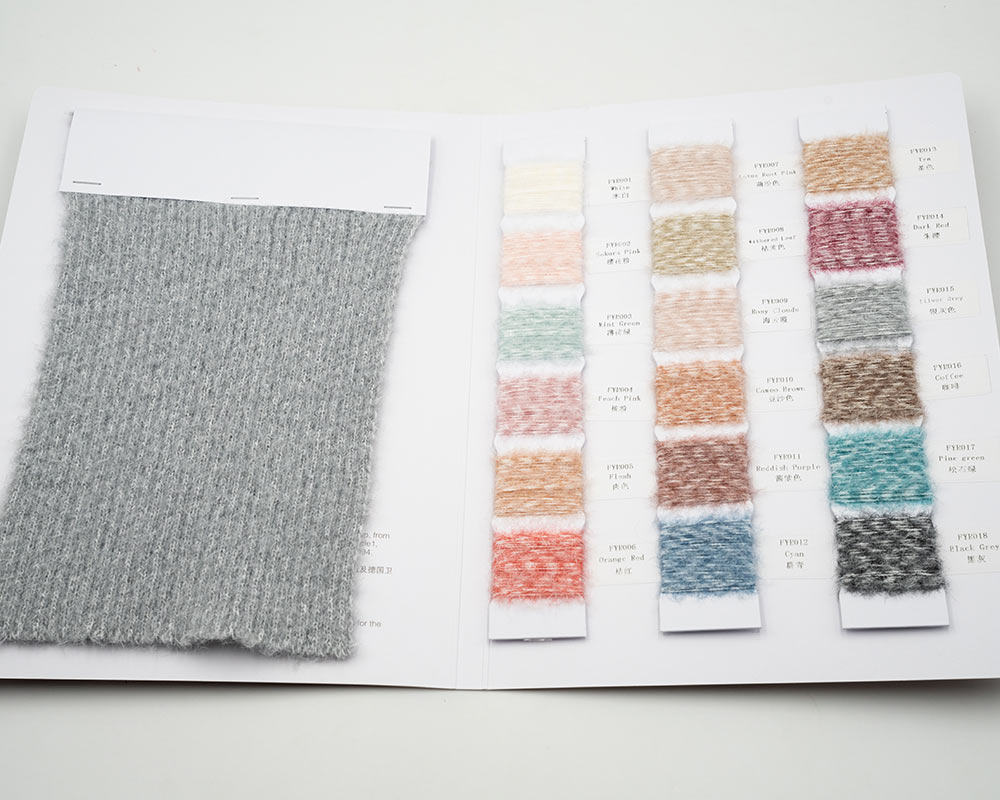
The feather yarn is a lightweight and fancy type of yarn that is characterized by the presence of delicate, feather-like fibers that protrude from a central core. The fibers are delicate, lightweight, and flow in a natural manner with the fabric, which provides clothing with a sleek and fluid appearance.
※ Key Features of Feather Yarn
- Soft and silky touch: The fiber ends are delicate and gentle on the skin, ideal for women’s and kids’ products.
- Lightweight construction: Feather yarn is airy and does not add unnecessary weight to garments.
- Beautiful drape: The yarn creates fabrics with movement and elegance.
- Excellent machine stability: Works well on 7GG–12GG knitting machines with low breakage.
- Low shedding: Better fiber control ensures neat, clean surfaces.
- Cost-effective: A practical choice for large-volume production.
※ Common Applications of Feather Yarn
The following are some of the most popular uses for feather yarn:
- Women’s sweaters and cardigans
- Kids’ knitwear with soft surfaces
- Lightweight scarves
- Autumn fashion tops
- Home textiles such as blankets or throws
- Soft accessories for fashion brands
These specs are capable of addressing a wide range of seasonal requirements, and they are equally effective when used in various designs and gauges.

What Is Mink Yarn ?
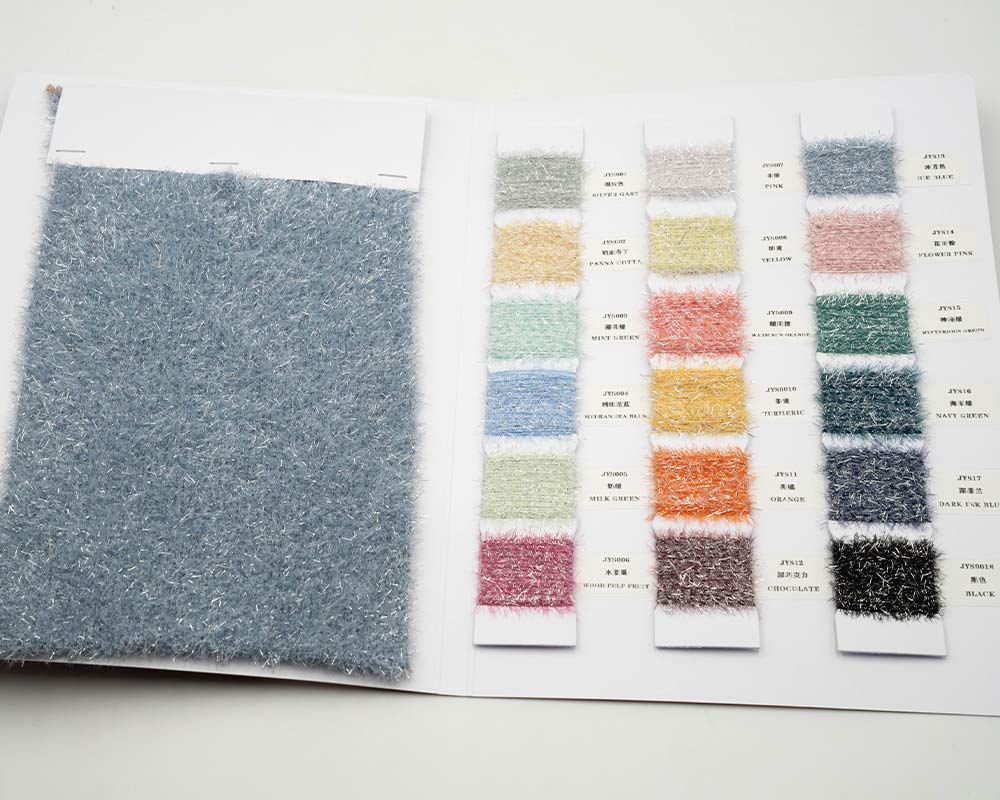
A luxurious yarn that is of the highest quality and is distinguished for its dense, vertical pile structure is known as mink yarn, or fake mink yarn. It rapidly increases the worth and texture of winter clothing by generating a surface that resembles fur and is visually striking.
※ Key Features of Feather Yarn
- Winter pullovers
- Heavyweight cardigans
- Knitwear coats and outerwear-style garments
- Plush scarves, hats, gloves, and shawls
- Winter home textiles
- High-end fashion accessories
Different pile heights give marketers different alternatives for design direction and seasonal placement.
※ Common Applications of Mink Yarn
The following are some of the most popular uses for feather yarn:
- Women’s sweaters and cardigans
- Kids’ knitwear with soft surfaces
- Lightweight scarves
- Autumn fashion tops
- Home textiles such as blankets or throws
- Soft accessories for fashion brands
These specs are capable of addressing a wide range of seasonal requirements, and they are equally effective when used in various designs and gauges.
What Are the Actual Differences Between Feather Yarn and Mink Yarn?
※ Texture and Appearance
- Feather Yarn: Soft, airy, flowing, lightweight.
- Mink Yarn: Thick, plush, fur-like, luxurious.
※ Weight Difference
- Garments made with feather yarn are lightweight and hence ideal for cooler weather, such as those experienced in the fall or during a mild winter.
- Mink yarn is thicker and is intended to be used for clothes worn during the depths of winter.
※ Comparison Table
Category | Feather Yarn | Mink Yarn |
Texture | Light, airy, silky | Thick, plush, fur-like |
Hand Feel | Soft and smooth | Deep, rich, warm |
Weight | Lightweight | Heavier and fuller |
Gauge | 7GG–12GG | 3GG–7GG |
Production Ease | Very easy | Needs careful tension |
Best Seasons | Autumn, early winter | Winter peak season |
How to Choose the Right Yarn for Your Products
If you find yourself in a situation where you need to make a decision about whether or not to use Feather Yarn, you should pick it because of the following reasons:
- You are looking for knitwear that is lightweight
- Your target audience consists of quick fashion consumers as well as those in the mid-market.
- High-volume orders are handled by your factories
- You desire machine performance that is stable
- Bangladesh, India, Vietnam, and South America are all part of your target market
When the following conditions are met, choose for Mink Yarn:
Your winter collections have a really somber mood.
- High-quality, luxurious textures are what your clientele desires.
- You require more powerful warmth during the winter
- You distribute your products to countries with colder climates, such as Turkey and those in Europe
- You produce items such as scarves, caps, soft clothing, and household textiles.
◆ A Comparison of Fabric Effects
Fabrics Made with Feather Yarn:
– Not too heavy and graceful
– Gentle locomotion
– Appropriate for a variety of fashion types
Mink Yarn Fabrics:
– A profound plushy sensation
– A high-end appearance suitable for the winter season
– Best for making a visual impression as well as for providing warmth

Why Choose Duoyou Yarn as Your B2B Supplier
– 25 years specializing in fancy yarn
– Expertise in the field of fancy yarn for a duration of 25 years
– Is relied upon by significant manufacturing facilities located in Turkey, Pakistan, Bangladesh, and South America
– Adherence to rigorous pile control standards for consistent bulk quality
– An effective research and development team that is able to create bespoke colors and specs
– A minimum order quantity of 500 kilograms for the latest seasonal advancements, which is considered to be quite accommodating
– Delivery timelines that are dependable and communication that is quick
Conclusion
In terms of providing distinct benefits for a variety of product categories and seasonal requirements, both feather yarn and mink yarn are excellent choices. The benefits of feather yarn include its lightweight softness, dependable machine performance, and cost-effective manufacturing process, all of which make it an excellent choice for quick fashion, women’s clothing, and large-scale orders. Because it has a sumptuous appearance in the winter, a deep velvety texture, and great warmth, mink yarn is ideal for use in thick-gauge knitwear, premium brands, and markets in cold climates. In order to cover a wide range of seasons and product types, numerous factories opt to develop both yarns so as to maximize their flexibility and market reach. This is particularly relevant for B2B buyers. Duoyou Yarn, which has 25 years of experience in the industry, provides its global clientele with dependable quality, personalized development, and professional service. This support enables brands to create knitwear collections that perform exceptionally well and are commercially successful year after year.
Related News
Discover more about the latest developments in the yarn industry, explore articles on development trends and innovative technologies, and provide you with more industry insights.

Why Leading Knitwear Manufacturers choose Duoyou’s Sanded Yarn
Have you ever worn a sweater that looked great but caused your neck itch as soon as you put it on? Yes, we’ve all been there. The color and design might be just right, but as soon as the yarn starts to itch, your “favorite sweater” becomes a nightmare in your closet.
This is a big problem for knitwear companies and brands. People these days want more than just style; they also want comfort. You can’t sell a sweater that looks fine but feels bad.That’s why more and more manufacturers and knitting factories are using sanded yarn, a fancy sort of yarn that modifies how a garment feels on the skin.

Is It Okay to Use Acrylic Yarn for Beanies? Yarn Insights on Benefits, Performance, and Wholesale
Chenille yarn is one of the most luxurious and high-demand yarns used across apparel, home textiles, and craft markets. Chenille yarn has a thick pile surface, a soft hand feel, and a velvety look. It has been a favorite of brands and manufacturers looking for comfortable products with high-end looks.

Microfiber Yarn: Good Choice for Sweaters and Lounge-wear
As a knitwear manufacturer or knitted garment firm, the type of yarn you choose has a direct effect on how well your major orders do. This is especially true for sweaters and lounge-wear, where comfort, durability, and consistency are what keep people coming back. Douyou Yarn Company, a professional Fancy Yarn maker with more than 25 years of experience working with industry partners. This is a big problem for knitwear companies and brands. People these days want more than just style; they also want comfort. You can’t sell a sweater that looks fine but feels bad.That’s why more and more manufacturers and knitting factories are using sanded yarn, a fancy sort of yarn that modifies how a garment feels on the skin.